The Road to Healthier Communities: Why Medium-Duty Truck Electrification Can’t Wait
The evidence is in, and it’s more urgent than ever. Groundbreaking research recently published in Nature by the National Cancer Institute has revealed a chilling connection between air pollution and lung cancer mutations in non-smokers. The study analyzed lung tumors of 871 nonsmokers from 28 locations across four continents and found that tumors of patients in highly polluted areas had many more genetic mutations than those in areas with cleaner air, and exhibited a diversity of mutations, including patterns typically found in smokers.
This isn’t just another study about air quality – it’s a wake-up call that demands immediate action, especially when it comes to medium-duty commercial trucking.
The Hidden Health Crisis on Our Streets
For too long, we’ve treated air pollution as an abstract environmental issue. But this new NIH research reveals a stark reality: air pollution from fossil fuels is much more ubiquitous than secondhand smoke, and we are engulfed in fossil-fuel-burning pollution every single day of our lives, all day long.
Medium and heavy-duty trucks are the lifeblood of our economy, moving goods and people through every neighborhood, past every school, and along every delivery route. But they’re also significant contributors to the toxic particulates that are literally changing our DNA at the cellular level.
Medium-Duty Trucks: The Critical Missing Link
Here’s the staggering reality: while medium- and heavy-duty trucks represent only 10% of vehicles on the road, they are responsible for almost 30% of all transportation-related greenhouse gas emissions, 45% of nitrogen oxide emissions, and more than half of fine particulate matter emissions for all vehicles. At 450 million metric tons of carbon dioxide, these trucks generate about 3 times the amount of CO2 produced by commercial aviation in the United States.
These vehicles operate in the heart of our communities – delivering packages to residential neighborhoods, transporting goods to local businesses, and moving people on shuttle routes where they interact directly with pedestrians, cyclists, and families. The Environmental Defense Fund found that pollution from freight vehicles disproportionately affects low-income communities and communities of color, as this pollution concentrates near highways, warehouses and ports where these communities are located.
The impact is immediate and measurable. When a diesel step van makes its daily delivery rounds through a residential area, it’s not just transporting packages – it’s depositing harmful particulates that can trigger the exact genetic mutations identified by the NIH study. Every stop, every route, every delivery becomes an exposure event for the communities these fleets serve.
The Technology is Here, The Time is Now
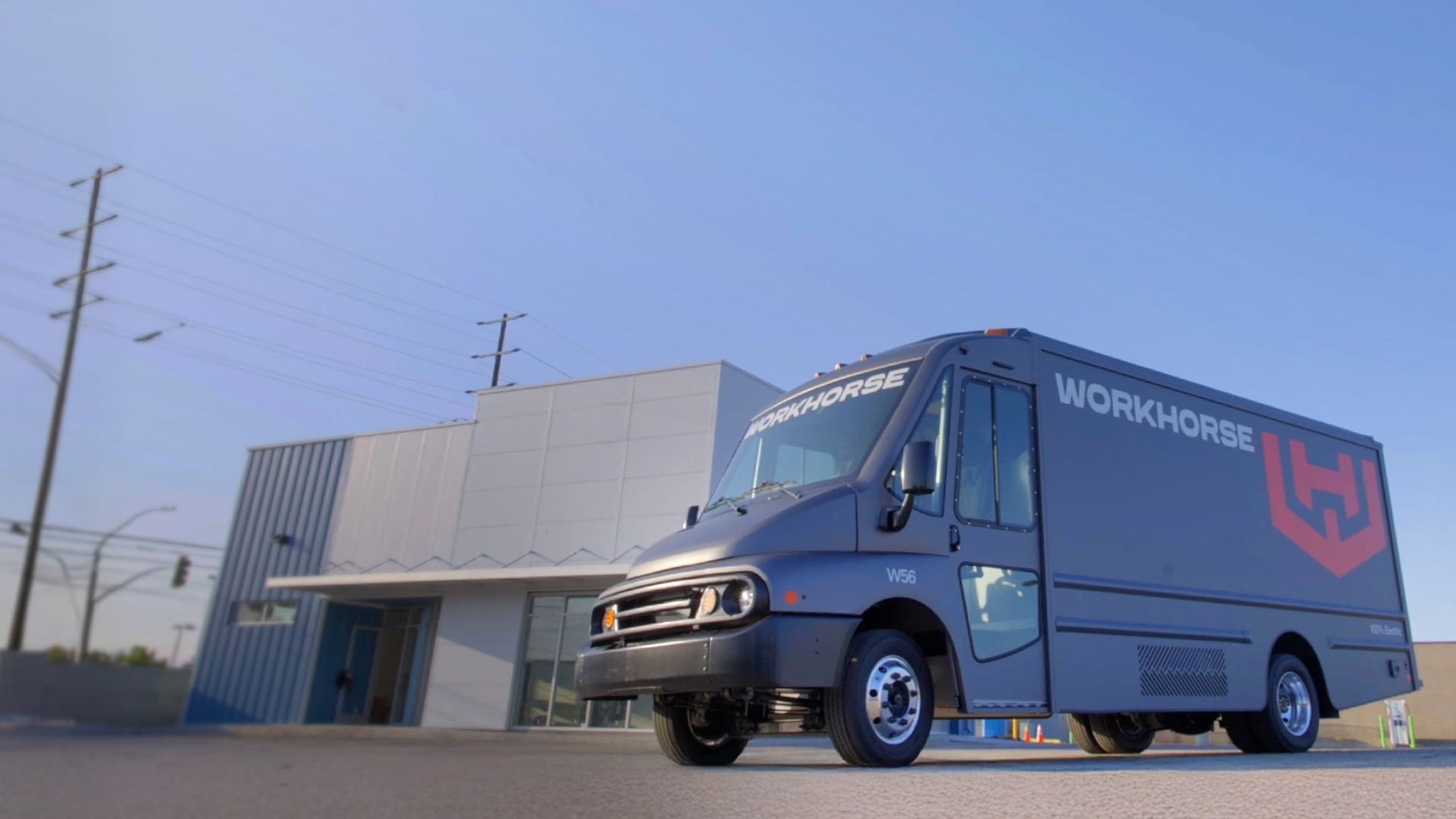
Medium-duty trucks are the sweet spot for electrification, and the technology challenges that plague heavy-duty long-haul vehicles simply don’t exist here. Most medium-duty routes are local or short-haul, predictable round trips that return to base for overnight charging. Our own customer data shows step vans averaging about 40 miles per day – well within the 150-mile range of our LFP battery-equipped trucks.
At Motiv, we’ve put more than 400 vehicles on the road that have collectively driven 6 million miles and delivered approximately 300 million pounds of goods.
The operational benefits are compelling: our 400V powertrain system is compatible with most public infrastructure and all level 2 and level 3 chargers, saving fleets significant money since level 2 infrastructure costs one-third to one-fourth the price of level 3 charging. Customer data suggests savings of 50 cents per mile driven after switching to electric.
Real-World Impact, Real-World Results
Consider the daily reality: approximately 67-87% of U.S. freight travels in shipments less than 250 miles – exactly the range where medium-duty electric trucks excel. A traditional diesel delivery truck making 100 stops per day in residential neighborhoods exposes thousands of people to harmful particulates. An electric truck making the same route? Zero tailpipe emissions, zero particulate matter, zero contribution to the genetic mutations that are literally changing our cellular makeup.
Our customers understand this transformation. They’re seeing the difference firsthand – not just in their bottom lines, but in the communities they serve. When you switch to electric, you’re not just adopting new technology; you’re becoming a force for good in every neighborhood along your route.
The Economic and Health Equation
The NIH study makes clear that air pollution is already considered the second leading cause of lung cancer. The healthcare costs associated with air pollution-related illnesses are staggering and growing. Meanwhile, the cost of electric commercial vehicles continues to plummet as battery technology improves and charging infrastructure expands.
This is not a future problem. It’s a current crisis, and it calls for action today. Every day we delay electrification is another day of unnecessary exposure for millions of people in the communities our commercial fleets serve.
The research comes at a critical time when clean energy policies face political headwinds. But the science is clear, and the technology is proven. Solar energy – now the fastest-growing form of energy generation globally – can power our electric fleets for less than 2 cents per kWh in many markets. The electricity generated from just one hour of the daily 1 GW of solar capacity being added worldwide is enough to power a Motiv electric van for 100 miles every day for 30 years.
The environmental math is simple: running a medium-duty electric vehicle on solar-fed electricity reduces lifetime CO2 emissions by more than 90% compared to diesel or gasoline engines. But now we know the health math is even more compelling – we’re literally preventing genetic mutations that can lead to cancer.
The Transition Can’t Wait
This new research should be a clarion call for anyone and everyone involved in commerce. The question isn’t whether we can afford to electrify our medium-duty fleets – it’s whether we can afford not to.
The technology exists. The infrastructure is expanding. The economics work. And now we have definitive proof that the health stakes couldn’t be higher.